
New Milford City Directory Collections
The strongest documented run is a holdings list at the Bridgeport History Center, outside Litchfield County but useful for New Milford research. It names editions for 1927, 1950, 1960, 1966, 1969, 1971, 1974 through 1976, 1978, 1981, 1983, 1985, and 1987 through 1990. The Library of Congress adds New Milford telephone volumes and regional editions. The Connecticut State Library has a New Milford-related digital item whose exact title and year need catalog confirmation.
| Collection | Years | Where Held | Access |
|---|---|---|---|
| New Milford city directory volumes | 1927; 1950; 1960; 1966; 1969; 1971; 1974–76; 1978; 1981; 1983; 1985; 1987–90 | Bridgeport History Center | Holdings lead; confirm onsite availability |
| New Milford telephone directories | 1961/62–1965/66 | Library of Congress | Image, text, and PDF views |
| Bridgeport District regional directory | June 1930 | Library of Congress | Search locality pages and OCR |
| State Library digital item | Title and year not confirmed | Connecticut State Library ContentDM | Confirm catalog metadata first |
| New Milford maps and Sanborn sheets | 1853; 1887; 1892; 1897; 1904; 1909 | Library of Congress | Companion building and owner clues |
The table distinguishes a confirmed holdings lead from an item that needs repository verification. No official New Milford Library page reviewed a complete local reverse-directory or obituary-index run. That absence is a research question, not permission to fill the gap with an assumed publisher or annual series.
New Milford Directory Shelf
The Bridgeport History Center’s directory page is valuable because it names New Milford editions even though Bridgeport is outside the town and county. A shelf in a regional repository can preserve a run that a town website does not list. Before traveling, ask whether the volume is on site, whether the year is complete, and whether staff can check an address or name.
Use the edition as a time capsule. A name entry may carry an occupation or street line, but a household can change between listed years. The source is best for a dated clue that can be compared with a parcel, deed, newspaper, obituary, or historical society item.
The Bridgeport History Center directory holdings page is the documented place to begin checking those New Milford years.
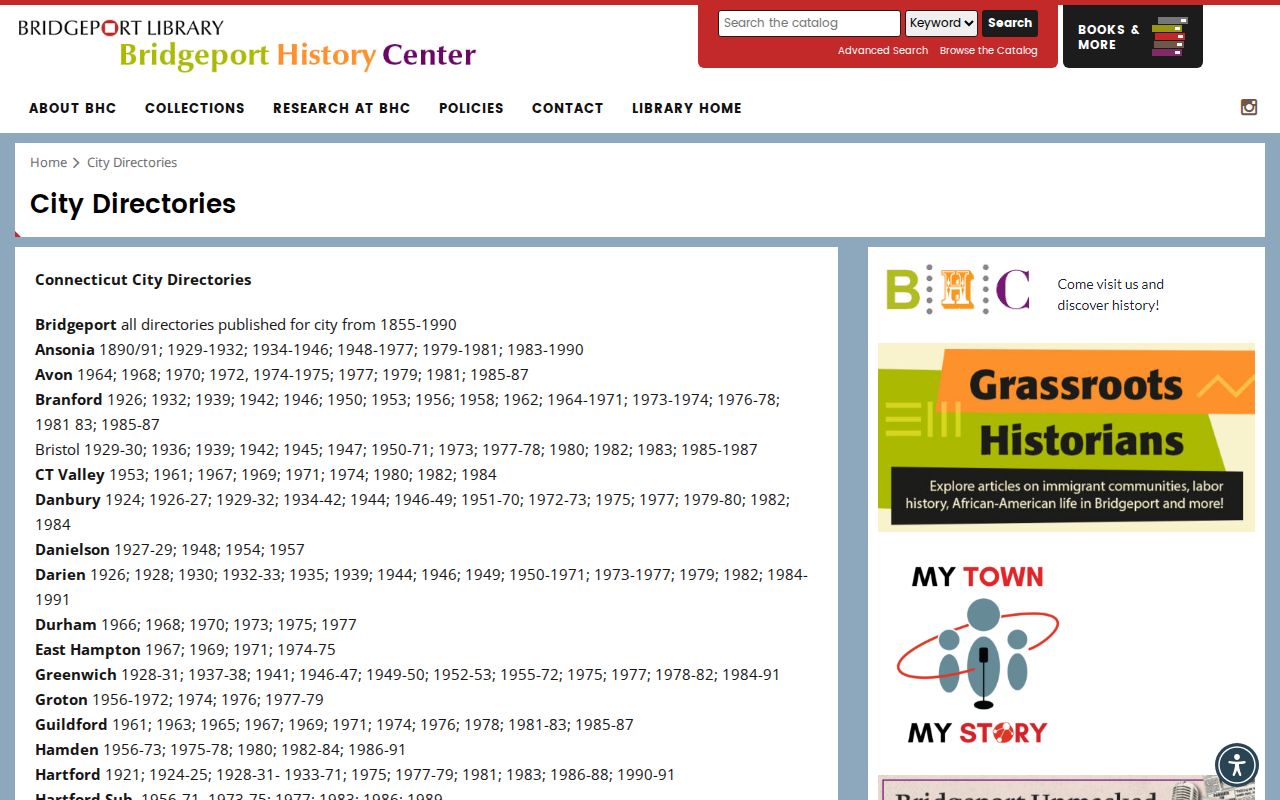
The regional shelf expands the New Milford city directory search beyond the town’s own public pages without pretending every volume is digitized.
New Milford Telephone Directories
The Library of Congress item for Connecticut White Pages and Yellow Pages includes New Milford telephone material from 1961/62 through 1965/66. The item has image, text, and PDF access, and the locality heading may appear on a separate page from the cover. Search names and street lines with spelling variants, then inspect the scanned page when OCR breaks a surname.
A telephone directory is not the same as a property roll. It can show a listed subscriber or business address for that edition, but an unlisted number, a business listing, or a move can leave the record silent. Use it as one dated layer in a household or address trail.
The Library of Congress provides the New Milford telephone directory item and its page navigation.
Regional editions can be useful when a New Milford-only search fails. A 1930 Bridgeport District volume and another 1950s regional item are documented leads, but the exact metadata for the latter remains unconfirmed.
Reading a New Milford Directory Entry
Start with the volume’s key, not with an assumption about what a mark means. A typical historical entry can combine a name, occupation or business, spouse or widow notation, street and number, and a letter that distinguishes residence from boarding. The exact symbols vary by edition, so record the printed abbreviation key with the transcription.
| Name | Usually the listed householder, subscriber, or business name |
|---|---|
| Occupation | A trade, office, business, or employer line tied to that edition |
| Address | House number and street, with local spelling and abbreviations |
| Family notation | A spouse, widow, or relationship clue when the volume supplies one |
| Owner or renter mark | Only when that edition defines a symbol or letter for it |
- Criss-cross directory
- A street-first section that reverses a name search and groups entries by address.
- Householder index
- An index organized around the person or household treated as the main address entry.
- Abbreviation key
- The volume’s legend for short forms, marks, occupations, and address notes.
- Index versus image
- An OCR or name index is a finding aid; the page image is the evidence to read and cite.
For modern address-keyed parcel work, use the New Milford street directory instead of treating a historical volume as a current roll.
New Milford Criss-Cross Directory
The research confirms that a criss-cross-style method is useful, but it does not confirm a complete New Milford reverse-directory run at the local library. Ask the New Milford Public Library, Connecticut State Library, or a regional repository whether a street-order volume exists for the target year. If none is available, read every listed entry on the street in a documented edition and compare the names with the current parcel trail.
This approach is strongest when the address is stable. A street name can change, a house can be renumbered, and a village or station name can replace the town line in an older source. Compare house number, nearby landmark, occupation, map footprint, and deed description before treating two entries as the same household.
When an entry needs a modern identity check, the New Milford resident lookup can point to current official record families without rebuilding the historical collection.
Tracing New Milford Directory Households
A city directory becomes more useful when each edition is treated as one frame in a sequence. Begin with a full name or street line, copy the occupation and exact address, and then search the next available edition. Pair the directory year with a nearby census year, a deed, a newspaper notice, or a cemetery and obituary lead. A missing name may mean a move, death, an unlisted number, a publication gap, or a changed street label.
- Choose the question and the first documented New Milford year, then note the repository and edition.
- Copy the name, street, number, occupation, spouse or widow notation, and any symbol key.
- Search the next listed edition, allowing for spelling changes, initials, and a new address.
- Compare the address with a parcel, deed, map, or newspaper source from the same era.
- Mark gaps honestly and ask a library, archive, or Historical Society for a confirmed substitute.
The resulting timeline is a family-history lead, not a claim that every person in the household appears. Pairing a directory with a census can reveal a change between two snapshots, but neither source alone proves a present address.
New Milford Historical Directory Research
The New Milford Historical Society reports more than 8,000 items and about 3,000 cataloged online. Its collection, timeline, schoolhouse material, and directed ancestor search can supply the local context that a directory line lacks. The Society lists Tuesday through Saturday hours from 11 to 2 or by appointment, at 6 Aspetuck Avenue, with a $5 adult admission and a genealogy contact route.
The directed search offers the first half-hour free, with additional time at $25 per half-hour. Copies are listed at $0.25 and scans at $0.50, with member benefits noted by the Society. Use that service to ask a focused question about an ancestor, property, school, or institution, and keep the repository’s answer separate from a public directory entry.
The Historical Society collection page documents its catalog, research service, and access terms.
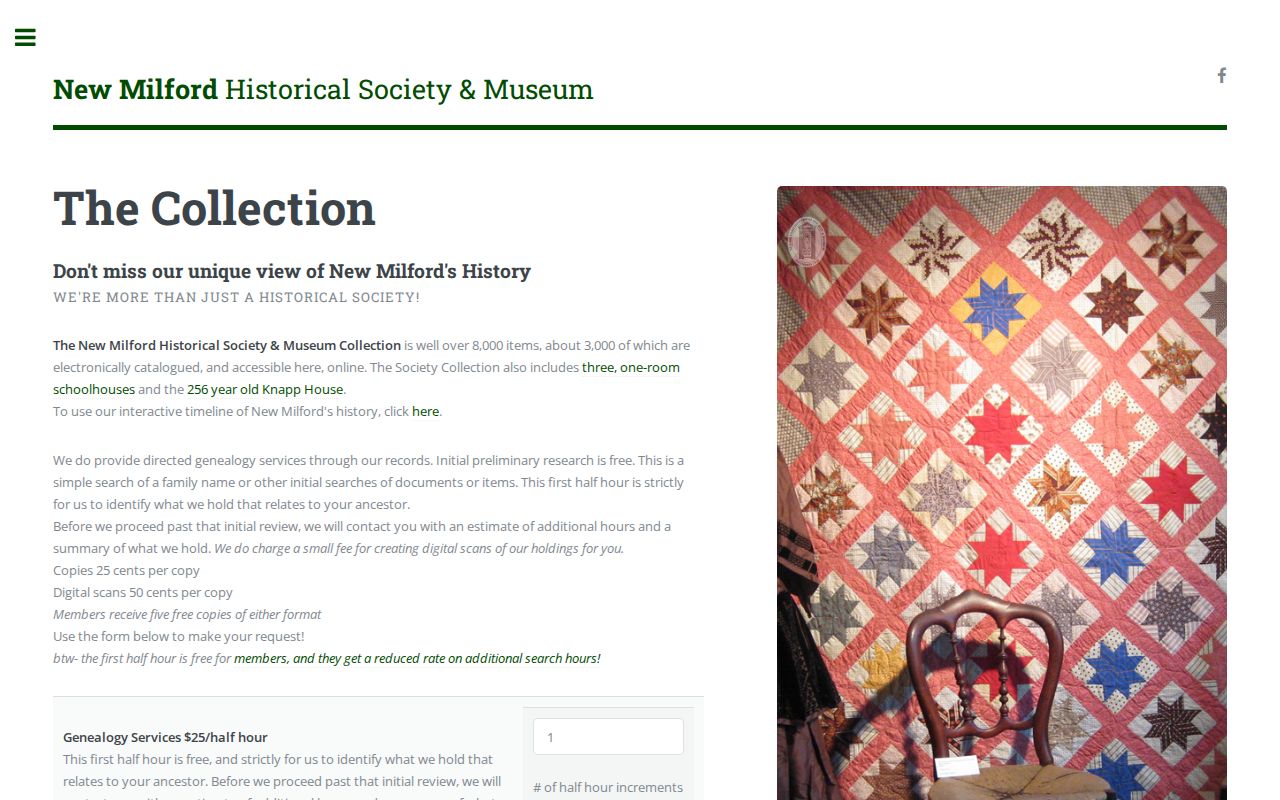
That local collection can help explain why a name appears in a directory, but it should not be used to fill an unverified gap with a guess.
New Milford Directory Map Clues
The 1853 Library of Congress map of New Milford shows selected buildings, residences, and named owners before Bridgewater’s 1856 incorporation. It is not a complete directory and does not use modern parcel IDs. Its value is as a bridge between an old road, village, or owner label and a present parcel.
Sanborn maps add building footprints, construction, and use. New Milford sheets are identified for 1887, 1892, 1897, 1904, and 1909, with 1892 and 1897 directly inspected in the research. Compare a map label with the Town Clerk deed chain and a directory year before assigning it to a family or address.
New Milford Directory Timeline
The known collection has gaps, but the dates still form a useful research spine. Place a directory or telephone volume beside the map and records changes that surround it.
| 1853 | Named-owner map offers a pre-PID building and place snapshot. |
|---|---|
| 1887–1909 | Sanborn sequence records streets, footprints, and building uses. |
| 1927–1990 | Bridgeport holdings list selected New Milford directory editions. |
| 1961/62–1965/66 | Library of Congress New Milford telephone editions. |
| 2002 | Town budget notes computerization of older land-record index books, including pre-1971 work. |
There is no evidence in the reviewed sources of a single uninterrupted annual run or a confirmed local publisher sequence. The gap itself is part of a sound New Milford city directory workflow.
Directory Gaps in New Milford
The New Milford Public Library’s public pages expose research and catalog entry points but not a complete local directory, obituary, or newspaper-microfilm inventory. The State Library digital item needs exact title and year confirmation. The regional 1950s directory lead needs metadata confirmation. A search that stops at a blank page has not proved that a volume or record never existed.
The FamilySearch catalog is another finding aid with place, surname, title, author, subject, keyword, film, and online-availability controls. Repository, account, and film access need confirmation for the exact New Milford item.
Write down the repository searched, edition years checked, name and street variants used, and the reason a result is unavailable. Then ask the library, State Library, Historical Society, or the relevant custodian for a defined next step. That practice preserves the difference between no match, no online copy, no public index, and no record.
Date every entry. A New Milford city directory line is historical evidence for its edition, not a statement about who lives at the address today.